
Turn the Clock To Zero
Behind the Scenes of a Sting Show

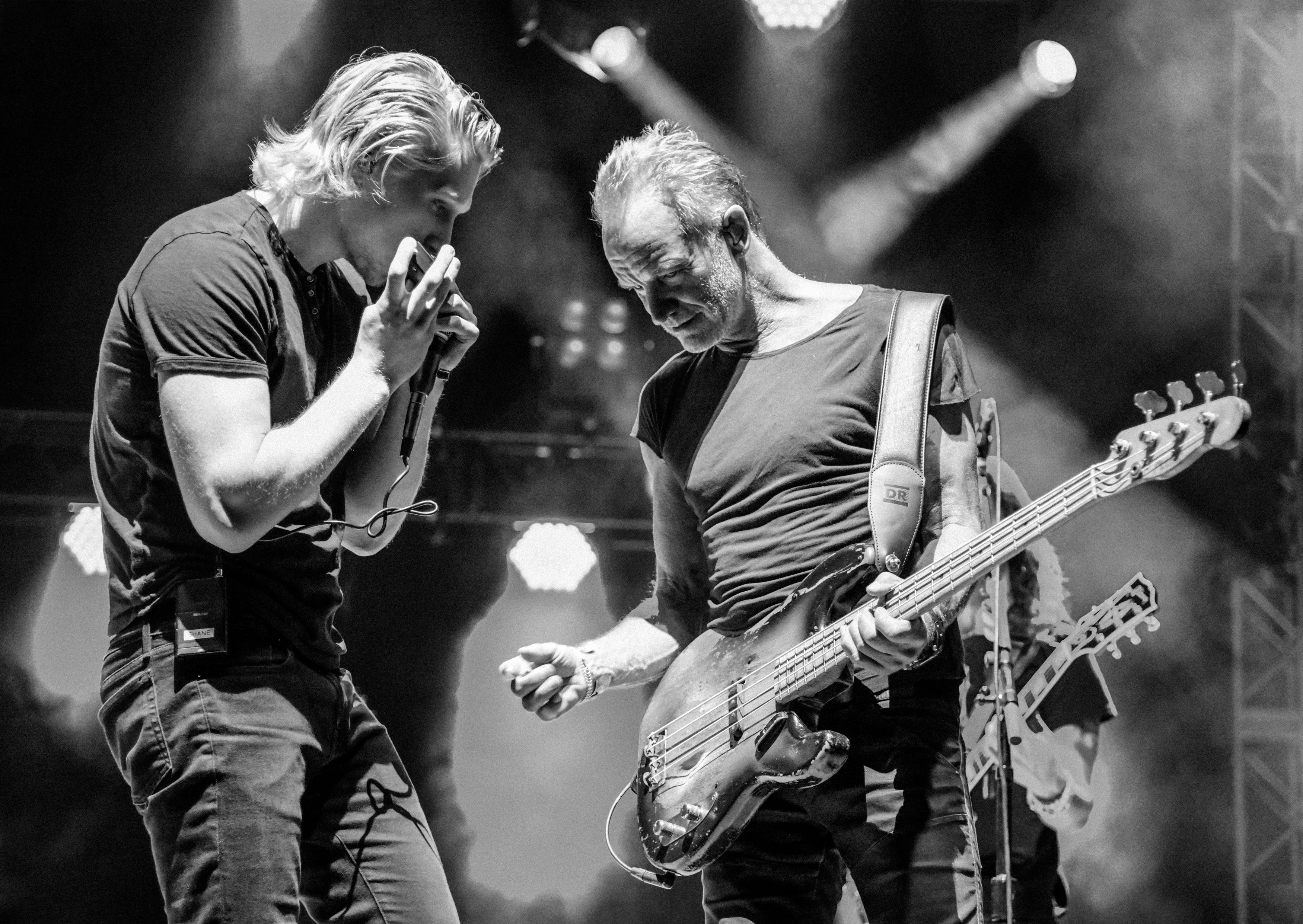
We’re always arriving.
In the chilly morning of another European city, our bus grinds to a halt. Inertia sends my bare feet ricocheting off the freezing wall of our personal bunks. The single source of heat in my coffin-like bunk was turned off by my head in the course of the night, creating a kind of ice box effect. I feel like preserved meat. My eyes open to the ceiling four inches above my face. Dark as always. I can see my breath exiting my body. A line of internal questioning opens, wondering if I even slept. I shudder, wipe my eyes, and turn on my personal light.
Just another day at the office.
We are two months into the tour. Show after show has been a massive success, with magazine articles praising us, crowds screaming, and sold-out stadiums. What happens far from the bright lights of the stage reveals not only the performers, but the tiny habits and idiosyncrasies of an average day.
A show day is the currency we have come to call our life. It
Many think that touring is chaos disguised as professionalism. This is false. It is a continuous state of ritual. It is professionalism disguised as chaos.
It takes about twenty seconds for us to pull off blankets, grab our backpacks, and stumble out of our pods and into the harsh light of morning. I can feel my teeth chattering and my nervous system adjusting to the painful reality of being awake. We don’t even look at our surroundings. We have one common goal: to get to a motionless bed for some real sleep. A morning nap is a pastime of touring musicians; delicious and necessary after a long night shut out from elusive REM hours.
Bus sleep is like late-night pizza: you’re glad you did it in the moment, but you’re also not sure if it had the desired effect the following morning because you feel like dog shit.
Being on tour is a practice in sleep deprivation, an exercise in excessive mileage. Touring with a rock band is learning how to suck it up when you feel like shit. There are no days off. There’s no being late. There are no sick days. There’s no room for the word “no”. Dehydration, exhaustion, disorientation, procrastination, and elation: the balancing act of a touring musician’s life. We tend to pass through at least one of these feelings in the course of an hour. This is normal.
If musicians are mountain climbers, touring musicians are astronauts shooting to the stars in a flux of altered perceptions. Altitude sickness gets trained out of you pretty damn quick when you take a place amongst the fast-moving tendencies of stars. I’m not a psychiatrist, but I would love to hear their evaluation of lost souls finding comfort in perpetual motion.
It’s easy to feel lost when you have everywhere to go.
The secret of every touring musician? We prefer feeling lost.
It’s our way of making sense of the world. It’s our sanity; A quixotic paradox of early mornings, weary minds, sore fingers, and hoarse voices.
We tilt our heads down so that we don’t fumigate our fellow bandmates with morning breath. We rush inside the lobby to get our hotel keys. Sterile, fluorescent lights are like blinding rays designed to vaporize vampires. Bouncing off the marble floor and into our delicate eyes, we squint through the pain of arrival. We feel like ants under an oppressive magnifying glass.
The concierge consists of strapping young men with scruffy beards in tailored suits and young ladies with gold name tags attached to pristine, freshly ironed grey blazers. Their enthusiasm is exhausting this early. They show us the elevator and proceed to unload the full history of the hotel, including the amenities, hours, etc. It’s a verbal assault on our shuffled senses. The elevator becomes a fishbowl of false smiles. Individually, we each pray that our floor is the first one up. Our brains are soft and mushy. There’s only so much you can take at 8 am after a 14-hour drive on winding roads. We arrive at our rooms, flash keycards over metal receivers, and collapse into our beds.
Home at last… at least for the next few hours.
This is our morning ritual. It’s not “wake the baby” or “brew coffee”; it’s “make a mad dash for the breakfast buffet, muscle down some eggs, lug bags into the room, check email, get a few hours of morning sleep, continue day as a functioning member of society in a town you don’t live in”.
Try as we might, we are not traditional members of society. We are wandering minstrels passing through ramshackle towns we will never see again. We exist in a state of movement, like water slipping through fingers. We are outlaws astride wild horses, saddled up and ready to leave at a moment’s notice. We are ghosts operating on the fringes of normalcy and thriving in a realm of the peculiar. We are, perpetually, nowhere, and we love it.
This is our circus. We don’t have lions, tigers, clowns, magicians, or trapeze artists. We deal in 1/4 inch cables, microphones, obscene amounts of caffeine, dry fish, Chewy bars, black t-shirts, travel miles, airline lounges, day drives, backpack water, room temperature beer, and sprinter vans. Our payment is applause, our steeds double-decker buses, our philosophical reward is repetition.
Welcome to Planet Tour.
Show days are a series of highly individualized rituals. Each one, frivolous as they may appear to the layman’s eye, serves a specific purpose. There is no superfluous action on a show day. Everything matters. A show day only consists of two unique hours as compared to any other, but the other twenty-two become incomprehensibly different as a result.
The reward of a show day is not a medal; it’s a shower, a beer, and some cold pizza waiting for you on the bus. Munching away, you descend into a fit of buzzed laughter, show reviews, and camaraderie. On this magical ride, your bandmates become an external family. They know you as well as your real one. They are all you have. Months away, roaming strange lands on an Arthurian quest of rock n roll glory; you’re only as good as your round table. Yet each knight is different, and how they choose to strap on their armor is unique to them.
The intervening hours pass in a haze of tiredness. I manage to get myself outside into the frigid air for a three-mile run. My philosophy on tour has always been to move your body as much as possible. Touring is stressful. The more opportunities you discover for stress relief, the better. Lacing up and jogging on cobblestone streets, cheeks turning pink, and gasping for breath has been a solid antidote to the trials of tour life. Endorphins tend to be the best antidote. Exercise has a way of helping you find new energy stores. In my shining sweaty armor, I always find that I’m more likely to have a good show after a run.
I call home to see how everyone is doing. Because we’re overseas, there is a limited time window when you can call people back home. I run through my checklist, mainly on FaceTime, and try to push the unpleasant reminder of how much time is left on the road before I see them in person again.
Calling loved ones can be torturous when you can’t see a finish line.
Before we know it, it's time to go… again. Our place of residence becomes the next venue, the next green room, the next bus ride.
It’s never where you are, it's where you're going.
My mouth tastes minty. Always gotta brush before checking the hotel room for instruments, in-ear monitors, and show clothes. I run around like a chicken with its head cut off, looking for things I know I’m not forgetting. It’s not until I’m in the elevator that I realize I don’t have my backstage pass. Must have packed it away in my suitcase for the millionth time. Sighing, I hope one of the other bandmates will be close by and I can smile my way past grumpy guards into our dressing room.
We are underway now. The next six hours will be a combination of anticipation, supreme liberation, and just a smidge of irritation.
We congregate in the lobby, bags slung over our shoulders. You can gauge the talk-ability of the band by the sunglasses: if they’re on, chances are they want to sit in silence. We respect each other’s non-verbal cues. Reading your bandmates becomes an unsung practice in family dynamics. We pile into the sprinter vans after a head count, and we’re off.
The boss has already gone to the venue.
We are already lagging behind, and the show hasn’t even started yet.
We dart through the streets of the city, the fogged-up windows creating a lens of condensation to see through. I lock eyes with different people; mothers, brothers, fathers, sons, babies, dogs; all living creatures I will never see again. My mind shifts into show mode. The sprinter lurches forward, bumping down steep climbs and causing nausea all around. Arriving at the gig, we are greeted by wardrobe and stage tech managers. The dirty fenced gate of the backstage area is our version of a white picket fence; tour buses lined up next to each other blasting steam from exhaust pipes; heavy set men in black t shirts and cargo pants with long scruffy beards smoking cigarettes and drinking shitty coffee from disposable cups. In the rotation of the world’s stages, one of the most reliable parts of our life has become the consistency of a backstage’s eco system.
We have arrived at our home for the next six hours.
Much of our lives is lived backstage. All the best moments, laughs, shades of grey; they don’t take place on the stage; they happen in the backstage area. The education, vibe, the essence of rock n roll has always been in the green room. People have this idea of rockstars; long-haired and tattooed with half finished cigarettes tilted out of mouths, cheap hookers on each arm, a bottle of Jack Daniels close by.
Ours?
Hummus. Peanuts. Sliced carrots and cucumber. Still water. A foam roller. Muddled ginger. Local honey. Sometimes a make shift pull-up bar. In the history of rock, we are an anomaly among the hordes of personal destruction.
A soundcheck serves a very specific purpose: a careful survey of sonic balancing. What it provides, however, is something much more nuanced: an exercise in creative ways to play the same songs differently. I always hope that we play “Why Should I Cry For You,” my favorite Sting song. I place my harmonicas down behind Rufus’s amp, grab my mic, and put my ear monitors in my ears. Time to work.
Soundcheck is like going to a car mechanic: tweaking, reworking, and checking to make sure the car is running well. Sure, your car could probably make it a few weeks without getting checked out, but it's better to be on top of it, to be consistent. Reshuffling, changing keys, tempos, and arrangements is as vital to a rockstar’s legacy as writing the songs in the first place. In doing so, it gives new life and meaning to relics of a forgotten time. I have never seen one so great at this as Sting. Methodical, meticulous, and measured, each soundcheck is different. Keeping the band on its toes not only removes boredom but also adds freshness to a repetition that could easily become stale.
Thoroughly satisfied with our soundcheck, we all fan out for the next hour. Some to call home, some to the dressing room, some to walk around the venue. We don’t see each other again till catering.
One of the most profound lessons you learn on tour comes from the catering room: always laugh at the little things with people you love.
Today’s menu? Questionable white fish with dry assorted freezer bag vegetables, pasta that took the word “al-dente” a bit too on the nose, and a dessert that doesn’t have a name but looks like a chocolate concoction of room temperature whipped cream and maraschino cherries.
In the scheme of things, it’s not that bad. In the micro circumstance of our rumbling tummies and looser fitting clothing, we look on in dismay. We were really hoping for a good one today.
In an attempt to save money on the road, many of us don’t eat much throughout the day, putting all our culinary eggs in one basket, hoping dinner will be good so we can fill our hungry souls until the next show. This is not always the case, and sometimes you're susceptible to tough catering.
It’s another series of lessons: sometimes putting too much stock into something can leave you disappointed, you appreciate the good in life with proper context, and no matter how hard you try, there’s no way to guarantee that freezer-defrosted shrimp won’t kill you.
Trust me; I’ve been burned enough times to know. Never. Fucking. Shrimp.
We wander back to the dressing room. The long hours begin; what I call the marathon. This is the time that makes or breaks everyone on the road. This is the toughest part of the day.
Playing the show is easy; enduring the wait until the show is excruciating.
I pull a book from my bag and begin to read. A few years back, I realized that I was squandering my time in the dressing room, obsessively scrolling or eating cheese out of boredom. I’ve found books to be the ultimate productivity hack on the road. On a show day, we spend on average four hours in the dressing room. That’s 1/6th of the day. Today it’s James Baldwin’s Another Country. Fitting given the circumstances. I go through about 30 pages before my eyes start to get sore.
Looking up from my book, I see that everyone is engaged in the most popular form of pre-show ritual: scrolling. I often wonder what rock n roll looked like before the invention of the iPhone and the addiction to social media. Conversation is something we engage in frequently as the tour begins. The longer a tour, the quieter the dressing room becomes. At a certain point, we are all just trying to make it through. A dressing room becomes a form of novocaine for the soul.
Dressing rooms are way stations; they may conjure up the same image in people’s minds, but each one is so unique. Some have rock-hard couches, some have cheese boards infested with flies. Some have coffee makers churning out ash-flavored beans, and some have a full bar. Some are just empty rooms. They all serve one purpose: corral a hostile band long enough so that they arrive on stage in one piece without massive damage to public property.
In the oasis of the green room, all is quiet. The calm before the storm. As the hours tick by, we begin to hear the rumble of the crowd: feet shuffling, conversations, the odd man out who just screams, “I love you, Sting,” even though we’re still hours from going on. As the clock moves toward 8 pm, we begin to get up, stretch, and prepare ourselves. Almost go-time. I feel the onset of nerves and realize the weight of my sleep deprivation. This is a passing concern.
Backstage prior to a show is an orchestrated joining of disorganized humanity. Tension hangs heavy in the air. Sound engineers, roadies, wardrobe, and production assistants pace up and down the dimly lit pathways below the stage. The smell of masked body odor mixed with freshly applied deodorant lingered as rusted metal transporter cases pile up, lining the hallways. It’s a mixed labyrinth of sights and sounds, rock n roll ghouls and goblins with walkie-talkies, plastic laminates, long hair, and tattoos. It’s the island of misfit toys in town for just one night only. The pre-show atmosphere is our form of meditation, planting us firmly in the moment.
The bustle of backstage sings in my ears as my shaking, sweaty hands pick up my harmonica. I check to make sure my slide is working, blow a few notes (usually it's a chromatic walk up from the C in the second octave to the F# in the 3rd), and after being satisfied with the reliability of my instrument, make my way to the wardrobe case.
Our uniform boils down to as basic as possible: black t-shirt and black jeans; a bunch of rock n roll Hamlets running around on stage. I remember the first time I played a show with my high school band, wearing a bright pink shirt, unsatisfied with the brotherhood of unanimous black. Now, all these years later, I begin to understand that anonymity is another way of saying community. What was true of my high school band director’s advice was true now: black always.
Fully outfitted in our uniforms for the night's show, Webbo, Gene, and I commence the holiest pastime of the in-between: pre-show pushups. It may sound stupid, but doing some kind of exercise before the stage tends to get us hyped up. Today we decided on 50. We always feel better afterward.
Plus, getting a pump for the cute girls in the audience is always a plus.
We sip Rufus’s classic honey/ginger tea, laugh, and review the changes made from soundcheck. Hopefully, we all remember what was said. If not, we’ll certainly hear all about it at the next soundcheck.
Walking to the stage always feels different. What makes it the same is the sounds: the murmurs of the now-filled arena, the heavy footfalls of black boots, walkie-talkie static, the tuning of the guitars, the sounds of backup singers doing scales and vocal exercises to warm up. I look out into the audience from the side of the stage. My heart beat increases, and the sweat starts to build in my hands. My harmonica shakes. No matter how many times we’ve done this, the nerves never go away. I tell myself that’s a good thing. The second the nerves leave is the second you’ve stopped caring.
I put my ear monitors in, grab my microphone, and take a deep breath. I look to Mel, Gene, Webbo, and Rufus, all off in their own pre-show worlds as well. Soon we will be united. Soon, we will engage in this holiest of holies: playing with one of the greatest artists ever.
Our stage manager, Seth, looks at us with a playful eye and asks if we’re ready. We are.
The moment has come.
”House lights go, house lights go, house lights go.”
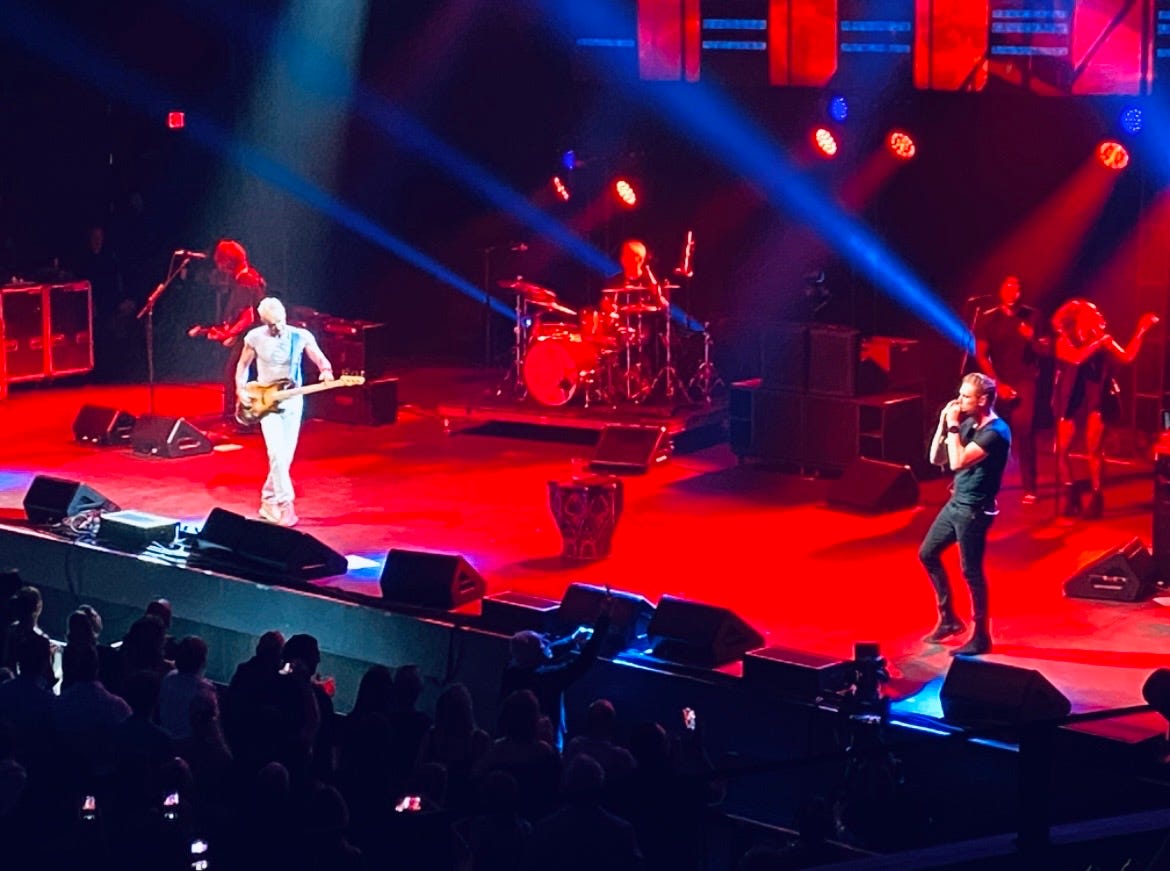
As the shimmer of dark blue light illuminates the stage and we climb the steps to begin the show, we have arrived again.
-Shane
Thanks for writing this, it totally clarifies alot about how that continuous state of ritual you mentioned before is pure profesionalism disguised as chaos, which is such a brilliant reframing of the touring life, especially seeing the raw reality you describe.
Great read Shane.